
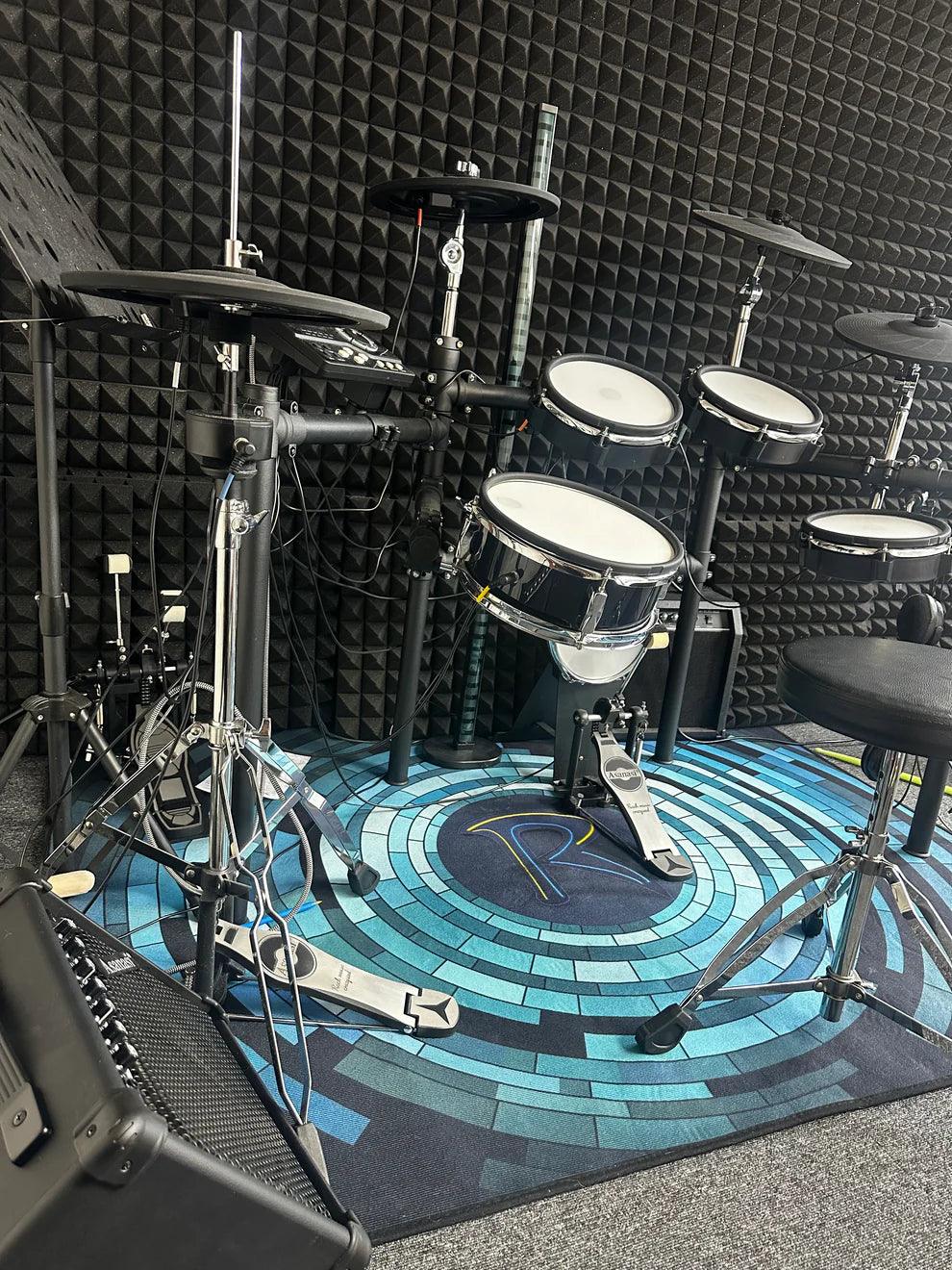
Beginner suitability guide
Yes鈥攅lectronic drum kits can be good for beginners, especially when headphone practice, adjustable volume, compact placement or computer connectivity make regular practice easier. They also have trade-offs: pad and pedal impact remains audible, playing surfaces feel different from acoustic drums, and features vary widely.
Good fit when
- Amplified volume needs to be controlled
- The practice space is limited
- Headphones or computer connectivity matter
- A metronome or coaching tools will be used
Check carefully when
- Floor impact may disturb another room
- The learner will move frequently to acoustic drums
- A conventional kick or hi-hat feel is important
- The full package and upgrade cost is unclear
Advantages for beginners
Headphone practice and volume control
An electronic module lets the player control its output level and usually practise through headphones. This can make practice more practical in a shared home. It does not make the kit silent: sticks still hit the pads and pedals can transmit impact into the floor.
Built-in practice tools
Depending on the module, a kit may include a metronome, coaching exercises, play-along functions or recording. These tools can help a learner hear timing and review a practice session. Check the current module specification rather than assuming every electronic kit includes the same functions.
Compact and adjustable layouts
Many electronic racks can fit into less space than a full acoustic setup, and pad positions can often be adjusted. The complete footprint still includes the throne, pedals, drummer and access around the rack, so measure the room before choosing.
Sound variety and connectivity
A module can provide different kit sounds and may connect to an amplifier, computer, mobile device or learning software. Connection types vary; confirm whether USB carries MIDI, audio or both and whether any drivers or adapters are required.
Trade-offs beginners should understand
Electronic drums are not silent
Headphones remove speaker output from the room, but pad strikes, cymbal strikes, pedals and rack movement remain audible. Kick-pedal impact can be particularly noticeable through floors. The room and building construction affect how much sound reaches other people.
Pad feel and target size differ
Mesh, rubber and other electronic surfaces can feel different from acoustic drum heads and cymbals. Pads may also be smaller. Timing and coordination can be learned electronically, but a beginner planning to play acoustic drums should become familiar with both layouts and responses when possible.
Some functions depend on the module
A multi-zone pad, cymbal choke, expansion input or software feature works only when the module and connected components support it. Check documented compatibility before assuming a future upgrade will work.
The complete cost may exceed the kit price
The package may not include a throne, sticks, headphones, amplifier, hi-hat stand, kick pedal or every required cable. Read the included-items list and add any necessary components before comparing total cost.
Electronic versus acoustic drums for learning
| Consideration | Electronic kit | Acoustic kit |
|---|---|---|
| Practice volume | Module volume can be reduced or monitored through headphones; physical impact remains | Direct acoustic volume with limited control |
| Playing response | Depends on pad surface, size, zones and module settings | Direct head and cymbal response |
| Space | Often compact, but rack, throne and pedals still need room | Usually needs a larger dedicated footprint |
| Practice tools | May include metronome, coaching, recording and connectivity | Usually requires separate tools |
| Sound output | Needs headphones or amplification | Produces acoustic sound without amplification |
Questions to answer before buying
- Where will the kit be used, and what floor-impact or room-noise limits apply?
- How much space is available for the rack, throne, pedals and player?
- Who will use it, and does the rack adjust to their reach and height?
- Is a controller pedal acceptable, or is a conventional beater pedal preferred?
- Which connections are needed for headphones, speakers, computers or apps?
- What is included, and which accessories must be purchased separately?
- Will the learner practise mainly on electronic drums or move between electronic and acoustic kits?
When an electronic kit may not be the best first choice
An acoustic kit may be the better starting point when acoustic response is the main learning priority, the space can support its volume, and no electronic practice or recording features are needed. A practice pad and lessons may also be a more practical initial step when the available space or budget cannot support a complete kit.
Next step
If an electronic kit fits the practice environment, use the beginner electronic drum buying guide to compare features. You can also browse the current electronic drum kit collection and verify each model's dimensions, package contents and connections.
Frequently asked questions
Are electronic drums good for complete beginners?
They can be. A suitable kit provides a stable, adjustable playing position and makes regular practice practical. The learner should understand the differences in pad feel, noise and included equipment.
Can beginners learn proper timing on electronic drums?
Yes. A metronome and consistent practice can develop timing on either electronic or acoustic drums. Module tools vary by model.
Are electronic drums quiet enough for an apartment?
Headphones control amplified sound, but pad strikes and pedal impact remain. Suitability depends on the room, floor, building and practice schedule.
Do beginners need mesh heads?
No single surface is required. Compare rebound, adjustability, target size, noise, feel and cost for the individual learner.
Can skills transfer from electronic to acoustic drums?
Timing, coordination and patterns can transfer, but pad size, rebound, dynamics and cymbal response differ. Practising on both helps when the learner expects to use both.


